
Family Law Matters Scotland

Categories
Children Cohabitation Divorce International Family Law

Civil Remedies for Domestic Abuse

Civil Remedies for Domestic Abuse

Abuse can come in many different forms; physical abuse, emotional abuse, financial abuse and coercive control to name a few. Sadly, it is not uncommon for one party in a relationship to come to us and explain that they have experienced, or continue to experience, some form of abuse or violence from their ex-partner.

Section 1 of the Domestic Abuse (Scotland) Act 2018 makes it an offence for a person to engage in a course of behaviour which is abusive towards a partner or ex-partner; if a reasonable person would consider that the behaviour was likely to cause the other person physical or psychological harm; and the perpetrator either intended the victim to suffer such harm or was reckless as to whether their behaviour was likely to cause such harm. 

If your ex-partner has behaved in a manner that is threatening, abusive and/or placing you in a state or fear, alarm or distress you should firstly contact the police to make them aware of the situation and see what action they can take depending on your specific circumstances. However, there are also a number of civil orders which can be sought to better protect you, whether in the course of ongoing family law proceedings or not.


  1. Interim Interdicts:

An Interim Interdicts is a particularly useful order, which can be sought urgently in civil proceedings at a pre-service hearing. This means that the order can be granted against an individual before any court papers are served on them. The interim interdict will then take effect once the papers are served.

A Non-Molestation Interdict (as it is commonly known), can have specific wording relating directly to the facts of your circumstances but in general will seek to prevent your ex from ‘molesting’ you by abusing you verbally, by threatening you, by putting you into a state of fear, alarm or distress or from using violence towards you. This is a common law interdict and the legal test is the balance of convenience. That means the question for the Sheriff will be whether it is more convenient than not to grant the interim order.  

Where children are involved, and depending on the circumstances of your case, it may also be possible to seek an interim interdict against removal of the child/children from your care in terms of Section 11 (2)(f) of the Children (Scotland) Act 1995.


  1. Power of Arrest:

A power of arrest can be attached to an interdict in terms of Section 1 of the Protection from Abuse (Scotland) Act 2001. The court must attach a power of arrest to the interdict only if satisfied of the following:

  • the opponent has had the opportunity of being heard; and
  • that the attachment of a power of arrest is necessary for the protection of the applicant from risk of abuse in breach of the interdict.

A power of arrest means that a police constable may arrest your ex-partner without a warrant if they have reasonable cause for suspecting that they are in breach of the interdict that has been granted and consider that, if they are not arrested, there would be a risk of abuse or further abuse in breach of the interdict. A power of arrest may remain in effect for a period of one to three years. The duration will ultimately be determined by the Sheriff granting the order.


  1. Determination of Domestic Abuse Interdicts

Section 3 of the Domestic Abuse (Scotland) Act 2011 provides that a person who is applying for, or who has obtained, an interdict may apply to the court for a determination that the interdict is a domestic abuse interdict. The court may make a determination if satisfied that the interdict is granted for the protection of the applicant against a person who is (or was) the applicant’s spouse/civil partner, living with the applicant as if they were spouses/civil partners, or in an intimate relationship with the applicant.

If an interdict has been determined a domestic abuse interdict, and your ex-partner breaches the interdict, they will automatically be guilty of an offence which may lead to a summary conviction or a conviction on indictment. Breach of an ordinary interdict would only have civil consequences.

You may also be advised about an Exclusion Order where your ex has occupancy rights to your home, or a Non-Harassment Order.

If you, or anyone you know is experiencing abuse with a current or former partner you should initially contact the police for urgent assistance.

For more advice about the civil remedies for domestic abuse, and all other family law matters, please contact us on 0141 420 2430 or emails us at reception@flmscotland.co.uk.


The content of this webpage is for information only and is not intended to be construed as legal advice and should not be treated as a substitute for specific advice. Family Law Matters Scotland LLP accepts no responsibility for the content of any third party website to which this webpage refers.

Categories
Children Cohabitation Divorce International Family Law

Child Inclusive Mediation

Child Inclusive Mediation

Mediation is a confidential, voluntary process which involves parties meeting with an independent third party, the mediator, who assists them in identifying the issues that require to be resolved between them and in developing suitable solutions that are acceptable to both parties. The mediator is a specially trained, impartial person who facilitates discussions and negotiations between the parties.

Family Law Mediation has seen a recent surge in interest as the courts have begun to actively encourage parties to attend mediation where possible rather than litigate matters. In appropriate cases, the Scottish Courts can also refer parties to mediation if it is viewed this would be a more successful.

Family Law Mediation can assist parties in negotiating a financial settlement on separation, and in considering what care arrangements are best for their children. In Scotland, until very recently, children were not previously involved in the mediation process but this is now set to change.

Our Consultant Janie Law has extensive experience as a Family Law Mediator and has now become one of twelve solicitors in Scotland to be trained in Child Inclusive Mediation (CIM). CIM provides the opportunity for a child to meet separately with the mediator to provide their views on the disputed matter. This is an entirely voluntary process both for the child and the parties who are in dispute. Not only does CIM enable children to be involved in the mediation process, but it promotes the opportunity for children to express their views and have their voices heard which is particularly crucial in contact/residence disputes.

It is important to highlight, as with children giving their views during the course of litigation, they do not become the decision maker but simply allows them to feel heard and provides the disputed parties with the opportunity to consider not only what they think is best for the child but also what the child thinks. Often this can ensure any decisions ultimately made are more successful in practice.

For more information about mediation and advice/assistance on beginning the process, please contact us on 0141 420 2403 or email us at reception@flmscotland.co.uk. 

The content of this webpage is for information only and is not intended to be construed as legal advice and should not be treated as a substitute for specific advice. Family Law Matters Scotland LLP accepts no responsibility for the content of any third party website to which this webpage refers.

Categories
Children Cohabitation Divorce International Family Law

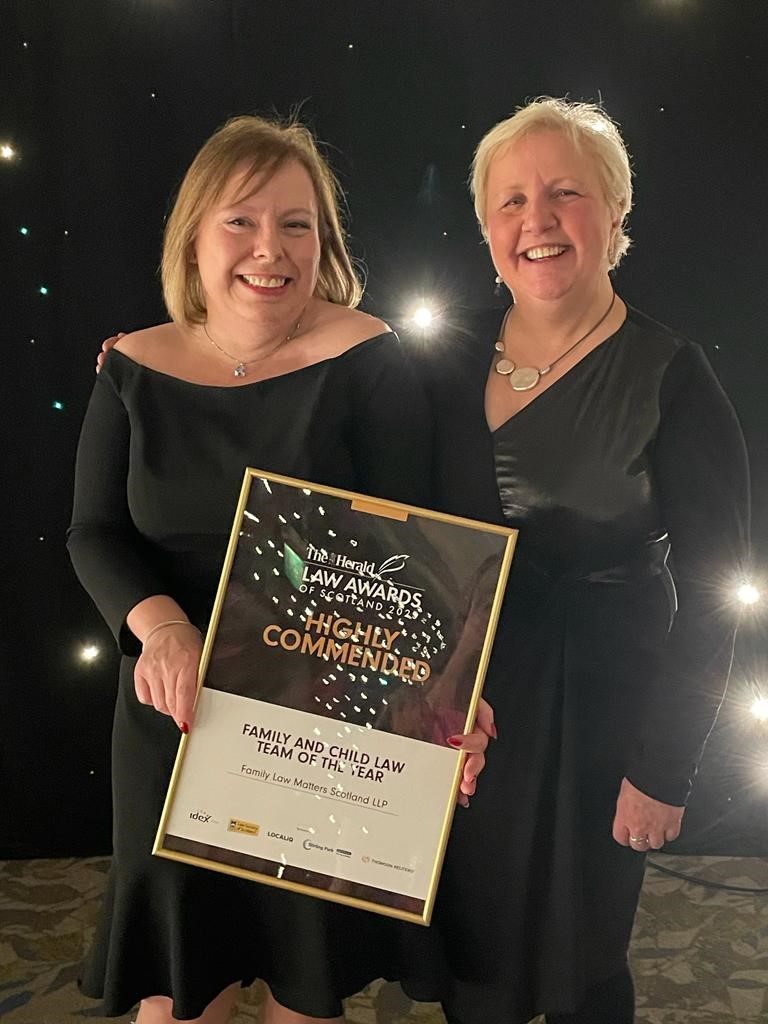
Highly Commended Family and Child Law Firm of the Year 2023

Highly commended Family and Child Law Firm of the Year 2023

We are extremely honoured that Family Law Matters Scotland were recognised at the ‘Highly Commended’ Family and Child Law Firm of the Year 2023 at the Herald Law Awards 2023 as well as being a finalist for Family and Child Law Team of the Year. This is a true testament to our dedicated and hard-working staff who are committed to providing top quality service to our clients.

Our Karen Gailey and Janie Law had a brilliant night at the Awards celebrating with our friends and colleagues. Congratulations to all the winners and nominees.


Categories
Children Divorce International Family Law

Sophie Turner and Joe Jonas: A case of wrongful retention under the 1980 Hague Convention?

Sophie Turner and Joe Jonas: A case of wrongful retention under the 1980 Hague Convention?

Following their announcement of an amicable split on 6 September, it has been reported that actress Sophie Turner has now raised a Petition under the 1980 Hague Convention seeking the return of the parties two children to England. Although it is now reported that they have reached agreement on an interim contact arrangement which provides for the children to spend equal time in the UK and the US.

While all cases turn on their individual facts, we can consider what Ms Turner would have to establish to raise a successful action for return.

As has been highlighted in my colleagues’ previous blogs, the 1980 Hague Convention seeks to secure the prompt return of children wrongfully removed to or retained in any contracting state, which includes abductions between England and USA.

In the case of Sophie Turner, it is alleged that her Petition was raised in New York seeking the return of her two children to England after they had been wrongfully retained in America. She states that the family relocated to England earlier this year.

Article 3 of the 1980 Hague Convention states: –

“The removal or the retention of a child is to be considered wrongful where it is in breach of rights of custody attributed to a person, an institution or any other body, either jointly or alone, under the law of the State in which the child was habitually resident immediately before the removal or retention; and at the time of the removal or retention those rights were actually exercised, either jointly or alone, or would have been so exercised but for the removal or retention.”

In order to successfully raise a Petition under the 1980 Hague Convention, Ms Turner’s agents require to show: –

  1. The children are under 16
  2. The children were habitually resident in England prior to the wrongful retention
  3. The wrongful retention is in breach of Ms Turner’s custody right; and that
  4. Ms Turner was exercising her rights of custody prior to the wrongful retention.

Establishing Habitual Residence:

The biggest hurdle in establishing a successful Petition for return is habitual residence. There is no definition of habitual residence in the 1980 Hague Convention but is generally considered to the be the place where a child is integrated in a social and family environment. Habitual residence is a matter of fact that has to be considered on a case-by-case basis.

Ultimately whether the children will be returned to England is a matter for the Judge in New York who will have the opportunity to consider all the facts of the case. In any event, the swift resolution of matters will no doubt be in the best interests of the children and respective parties.

Child abduction cases are particularly sensitive in nature and can have a detrimental impact on the children and parties involved, no matter what the outcome. We always seek to deal with such cases expeditiously and with empathy.

For advice and assistance in relation to child abduction and all other family law matters,  please contact us on 0141 420 2430 or email us at reception@flmscotland.co.uk.

The content of this webpage is for information only and is not intended to be construed as legal advice and should not be treated as a substitute for specific advice. Family Law Matters Scotland LLP accepts no responsibility for the content of any third party website to which this webpage refers.


Categories
Children Cohabitation Divorce International Family Law

Scottish Family Law Firm to Watch 2024

Scottish Family Law Firm to Watch 2024

We are delighted to have been ranked as the ‘Family Law Firm to Watch’ in Scotland by the prestigious Legal 500. 

This achievement is a testament to the dedication and expertise of our incredible team who work tirelessly to provide first class legal services to all of our clients. 

We’re grateful to all of our clients fro entrusting us with their most important and sensitive family law matters, and to our talented team for their unwavering commitment and continued excellence. We are incredibly proud of our entire team. 

This recognition inspires us to continue to deliver exceptional service to our clients and we look forward to continuing to make a positive difference in their lives. 

Marisa Cullen

Marisa joined Family Law Matters Scotland LLP as a partner in 2021. Marisa has been practicing law since 2005. She is double accredited by the Law Society of Scotland as a specialist in both family law and child law.

N.B Please note the contents of this Blog do not constitute any form of legal advice and you should always obtain individual advice as to your rights from a family lawyer.

Categories
Children Divorce

Financial Obligation to Children in Further Education

Financial Obligation to Children in Further Education

With the continuing cost of living crisis, parents and students alike will be considering what financial support, if any, is due from a parent to a student.

In Scotland, parents have a legal duty to support their child financially until they are aged over 25, where that child is “undertaking instruction at an educational establishment, or training for employment or for a trade, profession or vocation”. This is referred to as child aliment.

Children have a right to such financial support regardless of whether their parents are together or separated. It is a joint obligation upon both parents.

How Much?

While child aliment for children under 16 (or children under 20 who are in full time education) can be regulated by the Child Maintenance Service (CMS), the courts retain jurisdiction for those up to 25 years old if they meet the above criteria.

The test for the courts, and the test that parents may wish to consider, is what is reasonable in the circumstances, having regard to:

(a) The needs and resources of the parties (the parties being the child and both parents)

(b) The earning capacities of the parties; and

(c) All other circumstances of the case.

This means that there is no standard benchmark for student’s living costs and generally this will be discussed directly between students and their parents depending on their individual circumstances.

Possible Result

In practice, a student who is not receiving any, or perhaps insufficient, financial support that they require from their parents can raise an action to seek aliment from either or both of their parents. Therefore, it is important for separating parents in particular to consider whether reasonable financial support is being provided to their student children.

When does the Obligation End?

This financial obligation ends when the child is no longer undergoing “instruction at an educational establishment, or training for employment or for a trade, profession or vocation” or when they reach the age of 25.

 For advice on child aliment and other family matters, please contact us on 0141 420 2430 or email us at reception@flmscotland.co.uk.

 The content of this webpage is for information only and is not intended to be construed as legal advice and should not be treated as a substitute for specific advice. Family Law Matters Scotland LLP accepts no responsibility for the content of any third party website to which this webpage refers.


Categories
Children Cohabitation Divorce International Family Law

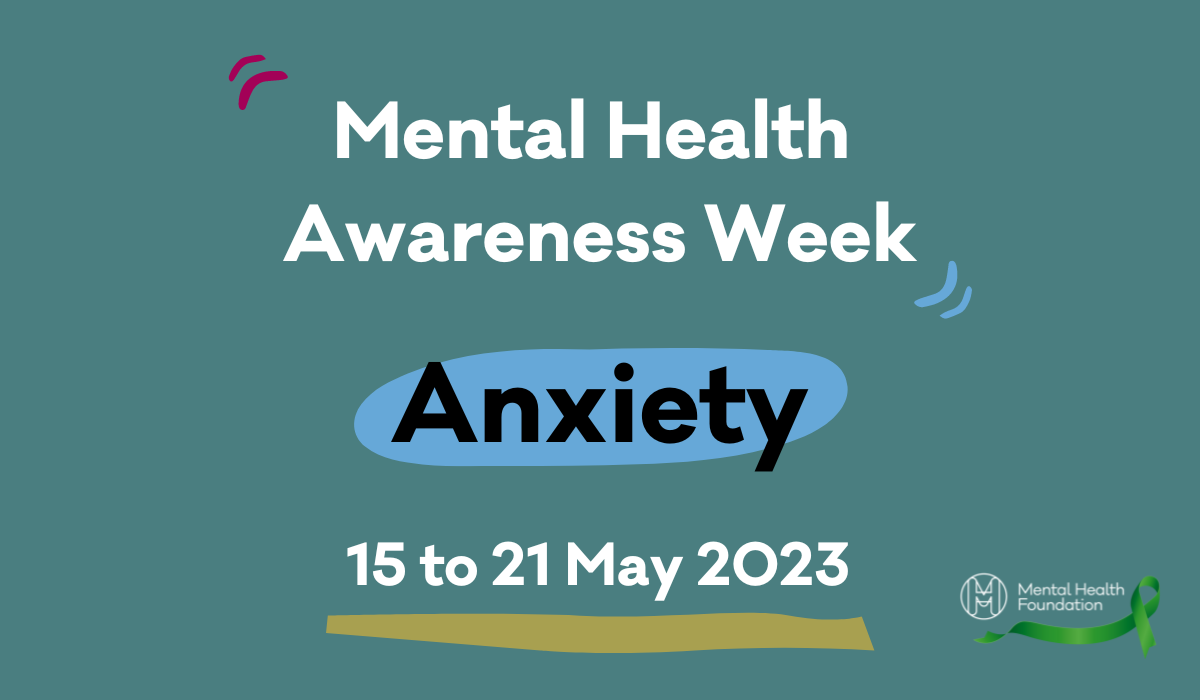
Mental Health Awareness Week 2023

Mental Health Awareness Week 2023

Mental Health Awareness Week 2023 is from 15 to 21 May. This is an opportunity to remind ourselves that mental health is a big part of our environment. The wellbeing of our clients, colleagues and staff is extremely important to us. We take this matter seriously and encourage each other to share our thoughts at weekly confer and daily over coffee breaks and lunch hours.

Our Janie Law recently took part in the walk of hope organised by Chris’s House. Janie raised funds for this incredible charity and found the experience extremely touching. She returned to the office and shared her experience with her colleagues. Well done Janie, we are all very proud of you!

Categories
Children Cohabitation Divorce International Family Law

Without Prejudice

'Without Prejudice' - When should this phrase be used, and can it magically safeguard your legal correspondence?

The phrase ‘without prejudice’ regularly appears in solicitors’ letters with the intention to prevent statements contained within the correspondence from being admissible in any future litigation on the same subject matter. However, in Scotland, ‘without prejudice’ does not magically safeguard your correspondence.

This phrase exists to encourage parties to settle their disputes out of court. The rationale is that settlement discussions will be more successful if parties are free to put all their cards on the table, secure in the knowledge that any statements or concessions made cannot be relied upon in future litigation except at their own insistence.

“Unless parties to such negotiations can feel safe in making an offer and stating the facts on which it is based the door to negotiations may be closed. It is for the benefit of litigants and others that statements should be freely made in order to settle litigation”. – La Roche v Armstrong [1922] 1 KB 485

This apparent ability to magically safeguard settlement proposals from later being used against you can save both parties the time and expense of litigation.

However, solicitors in Scotland must understand that ‘without prejudice’ privilege will only operate where the contents of the correspondence genuinely intend to facilitate the settlement of a dispute.

The Scottish courts have also held that the ‘without prejudice’ phrase will cease to have magical safeguarding abilities over correspondence where there has been a clear admission or statement of fact.

  • “‘Without prejudice’ means without prejudice to the whole rights and pleas of the person making the statement. If, however, someone makes a clear and unequivocal admission or statement of fact, it is difficult to see what rights or pleas could be attached thereto. I see no objection in principle to a clear admission being used in subsequent proceedings, even though the communication in which it appears is stated to be without prejudice.” – Daks Simpson Group plc v Kuiper 1994 SLT 689
  • “The addition of the words ‘without prejudice’ to a letter or other communication will not necessarily prevent an otherwise unequivocal statement of fact in the communication being found” – Albyn Realisations v Levenfleet [2007] CSOH 106

So, before tagging ‘without prejudice’ at the end of all correspondence, solicitors should consider: –

  1. Whether the correspondence directly relates to a matter in dispute; and
  2. Whether the correspondence contains specific concessions or statements intended to bring about settlement.

If so, stick ‘without prejudice’ on the end to safeguard your client and your correspondence.


But do not forget – your correspondence, or parts of it, will not be protected (and so may be admissible in court) if it contains a statement of fact.


Solicitors must take care to consider the specific content of any correspondence to determine whether this phase is necessary or indeed of any use.

For advice on all family law matters, please contact us on 0141 420 2430 or email us at reception@flmscotland.co.uk.
Categories
Children International Family Law

Careful Child Relocation

Careful Child Relocation

Our Partner Marisa Cullen has now been noted as the Country Reporter for Scotland with Careful Child Relocation. Joining a number of international experts in the field, Marisa is pleased to be utilising her in-depth knowledge on international parental child abduction and child relocation to assist Careful Child Relocation and the clients and solicitors who use this resource. 

You can view Marisa’s informative overview on Scots Law on international parental child abduction and child relocation here. 

Categories
Children Cohabitation Divorce International Family Law

What to Expect in your First Meeting with your Family Lawyer

What to Expect in your First Meeting with your Family Lawyer

The breakdown of a relationship is a difficult and daunting time for everyone concerned and here at Family Law Matters Scotland we aim to guide you through every step of the process. It may be the first time that you have ever consulted a lawyer and it may therefore be helpful to consider how your first meeting will be conducted and how you can best prepare.

Step 1: Legal Advice

If you are experiencing difficulties in your relationship, it is a good idea to obtain specialist family law advice as soon as possible. Every situation is different, and it is important that you obtain legal advice on your specific circumstances so that you are aware of all your options. Your solicitor will then be able to assist you in formulating a plan as to how best to progress with a separation if that is what you choose to do.

Your solicitor will discuss the various ways you can deal with your separation (link to our resolution options page) which include:

  • Negotiation
  • Collaboration
  • Mediation
  • Arbitration
  • Litigation

Step 2: Childcare Arrangements

If children are involved, your solicitor will want to understand what the current childcare arrangements are and how you would like these to operate going forward. When you are considering what would work best for the children you will need to consider the practicalities of the situation such as where you and your spouse/civil partner/ex-partner live in relation to each other and the school, and what activities the children have on certain days.

It may be that you have already come to a mutual agreement on this matter or your solicitor may write to your spouse/civil partner/ex-partner or their solicitor to negotiate the specifics of these arrangements.

It is important to consider that all arrangements should be in the child’s best interests and that their views should be taken into consideration as far as possible and in accordance with their age and maturity. Cooperation and communication between parents are always encouraged but it is recognised that in some cases this can be very difficult due to the history of the relationship. You can discuss with your solicitor the various ways that you could communicate with your spouse/civil partner/ex-partner and decide what would work best for you.

Step 3: Finances

Spouses/Civil Partners

Your solicitor will also want to discuss the financial aspects of your separation with you. If you are married or in a civil partnership, your solicitor will ask you for details of the assets and debts (in your joint and sole names)  that you had at the date you separated. This will allow them to work out the potential extent of the property which is to be divided between you and your spouse/civil partner. They will also request information regarding your income and outgoings. It will be helpful if you have details of the relevant values of your assets and liabilities at your date of separation but this is not essential.  

The starting point of the law on the division of the net assets of spouses/civil partners is that these should be divided fairly which often means equally. However, there can be special circumstances which justify an unequal division. There is no exhaustive list of what may constitute special circumstances. Accordingly, your solicitor will ask you some questions about this to check whether an unequal sharing may be justified in your case.

Former Co-habitants

The law applying to the division of property for couples who were not married or in a civil partnership is different. The legislation for former cohabitants provides that a former partner can make a claim against the other party for economic disadvantage suffered as a result of the contributions they made during the relationship for the benefit of the other party or any child, where that disadvantage has not been counter balanced by any economic advantage gained.

Accordingly, your solicitor will ask you some question about the respective financial positions you and your former partner had at the start of your relationship and at the end and the contributions that you each made during the relationship. That will then allow them to guide you on whether you have a claim or indeed the likelihood of a claim being made against you.

Unmarried partners only have one year from the date of separation to raise any claim in court, The court will not accept a claim out with the one-year deadline and therefore if the action is not raised in time, the ability to make a claim will be lost entirely. Accordingly early advice is essential particularly where you think your former partner may argue for an earlier date of separation.

Conclusion

Your solicitor’s job is to guide you through the legal aspects of your separation and divorce and to give you practical advice on how to achieve the best outcome for you based on the particular circumstances of your case. Through this process, there can be a lot of information for you to digest and we appreciate how overwhelming that can be. Please feel free to ask as many questions as you need and for your solicitor to clarify anything that is not clear.

At Family Law Matters we are pleased to continue to offer Initial Consultations in person, via video call or via phone calls for a fixed fee of £240.00.

To arrange your initial consultation for advice on separation, divorce/dissolution and other family law matters please contact us on 0141 420 2430 or email us at reception@flmscotland.co.uk.